
Small Business Branding: How to Create A Brand That Stands Out
Small business branding is not about having the prettiest logo on Instagram.
It’s about being memorable, trusted, and standing for something.
If you’ve ever thought, “My services/products are in demand, my work is good… so why aren’t more people choosing me?” — this post is for you.
I’ll break branding down in a way that makes sense for your small business.
You’ll Discover:
Why branding matters for small companies.
What makes a strong brand identity.
The difference between branding and marketing.
How to craft an authentic and compelling brand identity.
The exact step-by-step framework I use when branding my small business clients.
What is Branding for Small Companies? (And why does it matter?)
Branding for small companies is about creating an identity that’s unique to your business. It’s the feeling people have about your business when you’re not “in the room”.
In many ways, it’s like forming friendships. You meet someone, and they have an immediate first impression of who you are. If they like what they see, they’ll want to get to know you.
Over time, who you are, what you stand for, and how you present yourself define whether that person becomes your friend.
The Key Components of a Brand Include:
Your Identity: Logo, typography and colour palette - it all matters.
Your Values: What you believe in - your why.
Your Message: How you communicate with your audience.
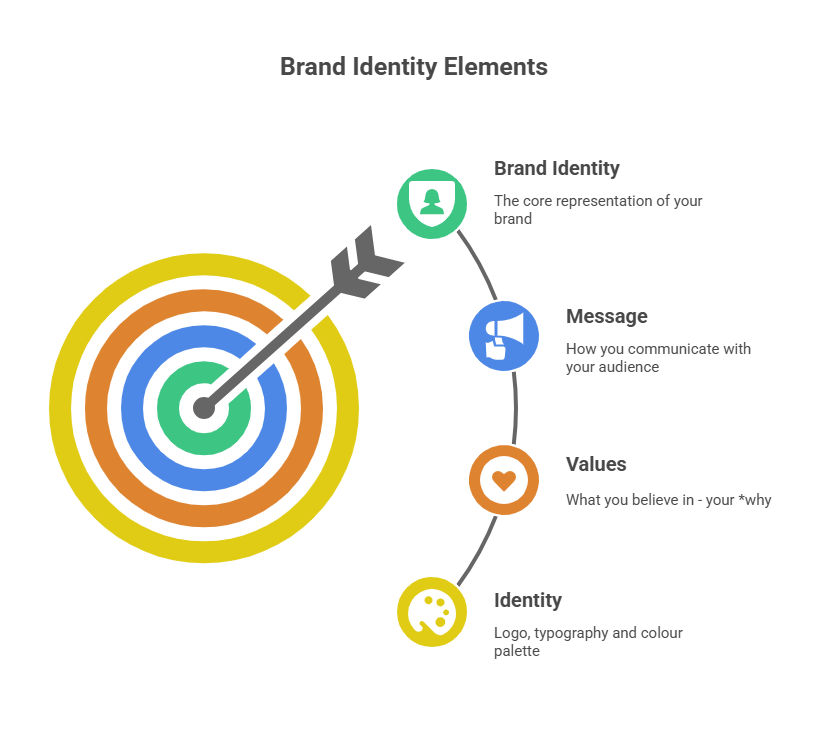
Your brand sets you apart from competitors and lets target audiences know why they should choose you.
Why is Small Business Branding Important?
Some people think branding is only for large corporations that need to show they have a personality. But small business branding is one of the most important tools at your disposal.
Without it, you risk fading into the crowd and failing to make a positive impression on your target audience.
Whether you’re a small local business, a solopreneur, or want to expand into new locations, branding is vital for your success.
It Shows You’re Credible
Consistent branding across multiple platforms and assets shows your business is professional.
For example, using the same logo, typography, and colour palette on your website, social channels, and printed materials ensures people instantly recognise your company.
It Makes You More Competitive
There are 5.7 million small businesses in the UK. Even if you’re a local business or have an ultra-niche offering, there’s going to be competition. When you create a brand that people relate to, you’re instantly more recognisable.
Prospective clients/customers know who you are, what you stand for, and what makes you different.
It Boosts Loyalty
People don’t just buy products and services; they invest in brands that mean something to them. Research shows that 82% of people choose brands with values that match theirs.
Think about a time when you’ve chosen a company because it supports environmental initiatives or donates a percentage of profits to a cause you care about. When you show people what you stand for, you attract the right customers.
Branding vs Marketing vs Advertising: What’s the Difference?
It’s simple, really:
Branding = Who you are
Marketing = How you communicate that
Advertising = How you amplify it
Branding should always come first. Without establishing who you are and jumping straight to the marketing and advertising stages, you’re saying “I’m here” - BUT, you’re not telling your audience why they should choose you.
Understanding Your Brand’s Core
It’s easy to get caught up in the visual stuff - because it’s fun! Choosing colours, designing a logo and selecting your font lets you be creative and see your brand come together. But, before you do anything, it’s essential you nail down who you are.
Yes, it’s the unsexy part. Yes, it can be frustrating, but the core is how you set yourself apart.
What’s Your Purpose, Vision, and Mission?
Making money is your ‘selfish why’, and there’s nothing wrong with that. You want your business to be profitable, and thinking about what you’re working for ensures you stay focused.
However, when creating a brand identity, you need to consider your altruistic 'why'. This is why you do what you do.
For example, a small coffee shop might want to create a community where people can relax, sample different blends, and enjoy a personalised approach.
Or a women’s-only gym might want to instil confidence in clients rather than body-shame.
Think of it Like This:
Your purpose is why your business exists.
Your vision is where you’re heading.
Your mission is how you get there.
The Formula:
Our business exists because [Purpose: The change you want to see in the world]. To make this a reality, we [Mission: The specific actions you take every day], with the ultimate goal of creating a world where [Vision: The future state you are building toward].
Let’s take the women’s only gym, for example:
Our business exists because everyone deserves to feel capable in their own skin. To make this a reality, we provide inclusive, shame-free coaching and movement education, with the ultimate goal of creating a world where confidence is defined by strength, not a number on a scale.
Example of Business Purpose, Mission and Vision Statements
My Website
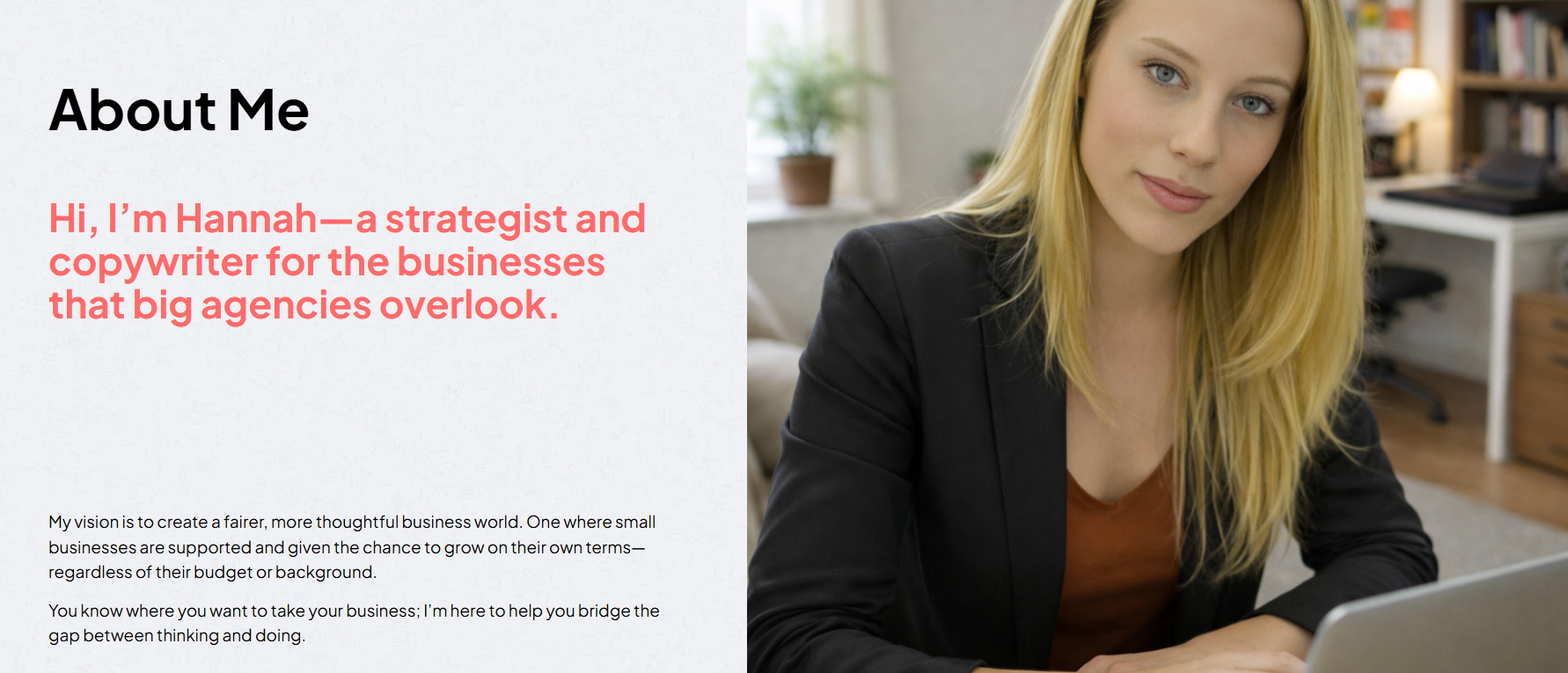
Yes, I’ve included my website because I want to show you how a service-based business can make its purpose, vision, and mission statement resonate directly with its intended audience (small business owners like you, in my case).
Getting to Know Your Target Audience
So, now you know why you exist and have your purpose, vision, and mission pinned down, it’s time to look at who you’re here for. It’s tempting to focus on everyone - but that’s a big mistake.
Every small business has ideal customers, and identifying them can help you focus on tone of voice, messaging, and visual identity.
Buyer Personas
Buyer personas are a valuable tool to identify who your products and services are for. Focus on:
Who your ideal customers are
What stage of life they’re in
The problem they’re trying to solve
For example, a small business selling mobility aids would focus on seniors and individuals with chronic conditions or disabilities. These people want to maintain their independence, get around easily, and use safe mobility aids.
Going Deeper
Once you have your base personas, it’s time to dive deeper. Focus on your primary audience, and ask yourself:
What they’re afraid of
What they want more than anything
What frustrates them about existing options
Secondary Audiences
Secondary audiences are groups that may also search or benefit from your products and services. Let’s use the mobility aid example again. Secondary audiences could include:
Family members looking for aids to support an individual with mobility issues.
Residential care providers.
Individuals recovering from an injury or operation.
Deciding What Makes Your Small Business Unique
This is where many small businesses struggle. It’s easy to get caught in the trap of thinking your differentiator needs to be amazing - but authenticity and clarity are more important.
The last thing you want to do is make grandiose statements that you can’t live up to, so think about what differentiates you from the competition.
What do you do well?
Do you receive similar feedback from customers/clients?
Does your company offer something different from competitors?
Is there something your competitors aren’t communicating?
Example
I worked with a client once who had a powerful differentiating point. If they exceeded the project's given timeline, they’d deduct £500 for each week they ran over.
This was a huge differentiation point because it gave clients peace of mind and reinforced their commitment to customer satisfaction.
Visual Branding
Now for the fun part: designing your brand. This is where you can get creative and think about what you want your audience to see.
It’s easy to get carried away here, but the best brands focus on visual elements that support their position rather than confuse it.
Colour Palette
Colour psychology is key here. Ever notice that banks and professional businesses often use blue? Or how eco-friendly companies incorporate green? This is because certain colours evoke emotions in audiences.
Blue represents calm, stability, and trust, while green portrays nature and sustainability. Red is the colour of passion, while purple evokes creativity.
When choosing your colour palette, make sure it reflects your business.
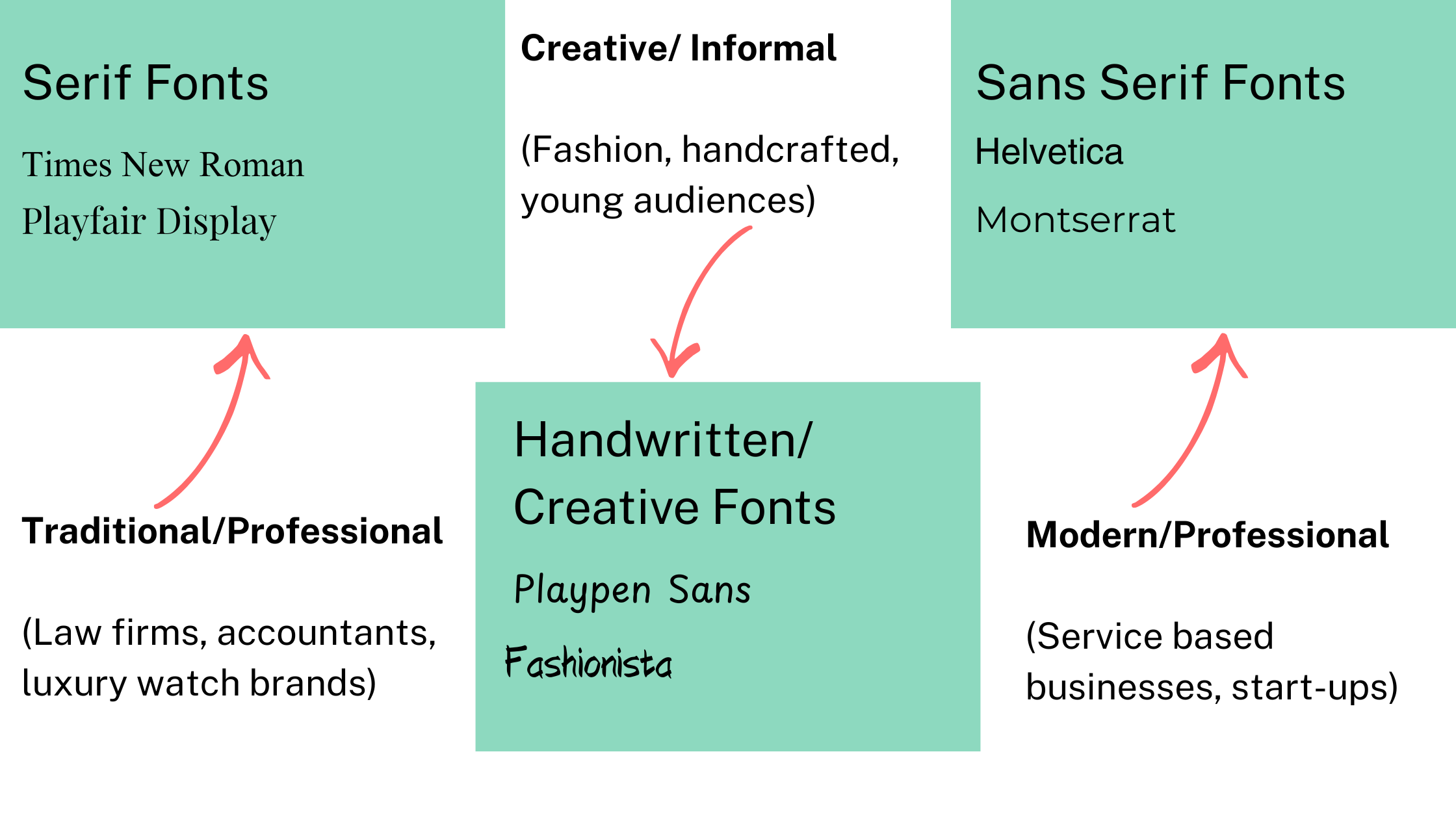
Typography
Typography should be easy to read while also demonstrating your brand’s personality. Focus less on standing out and more on what the font conveys.
For example, a professional service-based business should focus on professional and traditional fonts, while agencies, freelancers, and e-commerce brands should keep it clean, bold, and modern.
Logo
Your logo should represent your business and look professional. Again, it’s easy to get carried away, but the best logos are clean, memorable, and aligned with the brand. We all know Nike’s iconic tick, or McDonald’s infamous arches - these logos stick in the mind.
That’s what you want for your business.
Incorporate your brand colours, think about where you’d like a creative text-based logo or icons related to what you do, and don’t think you have to handle it alone.
Services like Looka and Photoroom use AI to help you design a logo. Or, get a professional to design it for you.
Brand Tone of Voice and Messaging
Your brand’s voice isn’t what you say, it’s how you say it. Brand voice and messaging require a balance between speaking to the right audience and being authentic.
For example, a professional law firm should avoid informal phrases and quirky language, while a Gen-Z-focused brand should ensure its tone of voice is on point for younger audiences.
Small wording choices make a big difference.
Find Your Tone
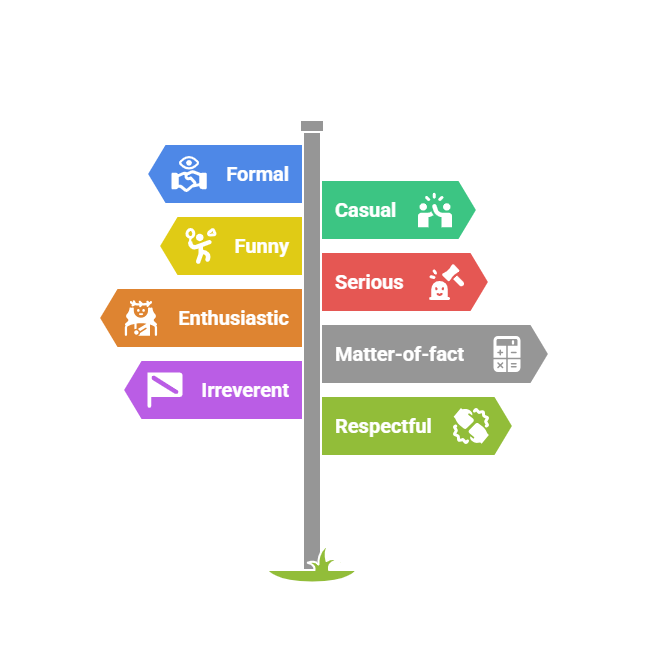
Decide where you sit on these spectrums:
Formal or Casual: Do you use formal greetings or keep it casual?
Funny or Serious: Is your business ultra-professional, or is there some room for wit?
Enthusiastic or Matter-of-fact: Are you lively and upbeat, or more of a steady roller?
Irreverent or Respectful: Are you a disruptor or more of a traditionalist?
Know Your Room
Context is everything. Think about what your audience wants and needs. For example, a residential care facility should be professional, empathetic, and welcoming. Trying to be witty can come across as disrespectful.
A Gen-Z-focused brand that tries too hard with phrasing or comes across as overly corporate may feel cringey. Authenticity is important for younger audiences.
Micro-Copy
Never underestimate the power of micro-copy. It’s those tiny little words that can make a massive difference to how people perceive your brand. Something as simple as a CTA button can turn visitors into customers - if the language is right.
For example, a professional business might use language like “Get in Touch” or “Book a Free Consultation”, while informal brands may keep it friendly with text like “Join the Family”.
Top Tip:
Knowing how you want to come across and finding the right words can feel impossible. Working with a professional copywriter can help you make every word work overtime for your small business.
The Identity Echo™
(The Framework I Developed to Help Small Businesses With Branding and Storytelling)
Branding is hard. It’s like looking inside yourself and figuring out who you are. Most importantly, once you figure out who you are, you need to find a way to get others to see it.
Bear with me here, because my small business branding framework is unique. But it works.
Step 1: Ask Yourself These Questions:
If my brand walked into a room, what impression would it make? For example, would it instantly grab attention? Would it be the friendly face who greets people? Or would it be approachable but in the background?
If my brand were a form of transport, what would it be? Are you an fast-paced motorbike? Practical car? Accessible train? Expensive private jet? Or a ship that carries the load?
How does my writing come across? Are there any words you use frequently? Do you sound friendly, professional, or quirky?
If my brand were a natural element, what would it be? Fire? Water? Earth? Air?
There are no right or wrong answers here. It can be anything that comes to mind - just make sure each answer relates to your brand. You can also use celebrities, countries, foods, songs, or anything else that makes sense to you.
Step 2: Ask Someone Else to Do the Same
Now for the most important part: ask someone else to look at your website and answer the same questions. It could be a long-term client, friend, or family member. Just make sure they’re impartial and will answer honestly.
Sometimes we think we come across in a certain way, but it takes an outsider to let us know how they see us. The magic happens in the 'Echo'—the gap between how you see yourself and how the world sees you. If you think you're 'Fire' but your clients see 'Water,' your branding is out of sync.
Step 3: Compare Their Answers With Yours
Next, look at their answers and compare them with yours. Are they similar or the same? Does the person see your brand in a way that surprises you?
For example, you may think your brand is like a Tesla - innovative, bold, and sleek. The person you asked might feel differently. It helps you see how others relate to your business.
Step 4: Be Realistic
Think about the differences in perceptions and what they mean for your brand. Minor differences might mean you need to make some changes to your messaging or visual elements.
But if there’s a huge gap between how you think you come across and how others see you, it’s time to step back and evaluate.
Maybe you need to focus on rebranding your small business. Or perhaps, you need to dial down your ambitions.
For example, a small restaurant positioning itself as the next McDonald’s might seem ambitious, but the message people walk away with is “unrealistic”.
Quick Tips for Brand Awareness and Consistency:
Maintain a Consistent Online Presence
Remember: consistency is everything.
Whether you’re blogging, posting on social media, creating ads, email marketing, or setting up a Google Business Profile, maintaining consistency across visuals, messaging, and TOV ensures you come across as professional, authentic, and memorable.
If you’re using social media, it’s important to find a balance between your branding and the platform’s main posting format. For example, Instagram is all about visuals, while LinkedIn is more professional.
Offline Branding
If you’re a local business, don’t forget offline branding. It creates a cohesive presence across all marketing platforms and assets.
Whether you’re mailing leaflets, producing signage, or taking part in a local event, make sure your online and offline branding match.
PR and Partnerships
Finding local businesses and events to collaborate with serves two purposes:
It gets your name out there.
It can help you generate backlinks.
For example, sponsoring a local event, teaming up with another business, or supporting a non-profit organisation are great ways to attract PR - especially when you’re on a limited budget.
Ready to Take the Next Steps?
If you take one thing from this post, let it be this:
Branding isn’t about looking bigger than you are. It’s about being clearer than everyone else.
Start with your core.
Build consistency.
And remember — the strongest brands don’t shout. They connect.
If you want help getting there, you know where to find me.
Download the Free Small Business Branding Kit
The free small business branding kit gives you everything you need to create a brand that your ideal audience loves. Plus, you’ll also get access to £150 + worth of marketing templates, materials, eBooks and cheat sheets for free. Just sign up, head to the Small Business Insights folder and grab your branding toolkit.
P.S - I’d love to support your journey by sending my latest tips to your inbox, but feel free to unsubscribe at any time (you’ll still have access to 10+ tools for small companies.
FAQs
How much does branding cost for small business owners?
It depends on whether you choose to do it alone or hire a professional branding consultant. Following the tips in this post gives you the foundations required to build an authentic brand, but working with a professional can be beneficial.
You can expect to spend between £200 and over £10,000. However, selecting which aspects to outsource can save money. For example, some small businesses are confident with their visual elements but need a copywriter for their messaging.
Or you might be fine with building your brand but need a marketing strategy to help people find it.
What’s the difference between small business rebranding and a brand refresh?
A brand refresh keeps your core messaging and visual elements the same, but it’s like giving your brand a fresh lick of paint.
Small business rebranding refocuses your messaging, visual elements, and other factors to make it more relevant to your target audiences.
How do I choose brand colours that are relevant but don’t look like my competitors?
Find your base colour (e.g. blue for trust or purple for creativity), then decide which tone you want. Accent colours let you create a unique palette that stands out from the competition.
If you’re not sure how to pick colours that complement each other, tools like Coolors can be beneficial.
