
AI Copy vs Human Copy: The 10 Round Showdown
AI is everywhere. It’s impossible to ignore it, and even though some of us roll our eyes at it, nobody can deny that it’s pretty damn impressive. Artificial intelligence is making it easier than ever to search for information, understand complex information, and get stuff done.
I’ll be the first to admit that I use it for a lot of marketing activities.
I take massive datasets and ask Genspark to tell me what I need to know.
I’ve played around with Gemini’s Nano Banana (which I’m still on the fence about, although it DID create the very cool image I used for this blog post).
And, I’ve skipped scrolling through the search engine results page because Google’s given me a convenient overview.
The one thing I DON’T use AI for is writing copy…until now (this is still human me).
Like most copywriters, I’ve lost clients to AI tools. But I still maintain that AI will never replace a human writer.
So, I’ve decided to put my skills as a human copywriter against AI in a 10-round battle. I’ll go head-to-head with AI tools testing speed, quality, originality, and brand voice.
Let’s do this.
The Contenders
The Human Copywriter
Weighing in at…(yeah, I’m not going to tell you that). Let’s keep it professional. So, entering the ring with 10+ years of experience, a coffee habit, and a passion for creating conversion-focused content is me - Hannah O’Neill.
The AI
And the contender. ChatGPT, trained on vast datasets across the internet, offers fast outputs in seconds. No editing, no human input, just ChatGPT-generated outputs.
Round 1: Speed
Well, this one was obviously not even close. I wrote a 1,000-word blog post in two hours; ChatGPT did it in 20 seconds. So yes, it’s clear that AI wins this round…or does it?
Because even though the initial output took just 20 seconds, the content still required extensive editing. I had to weave the right tone of voice in, make sure it was optimised, and add original perspectives.
So, the total time was more like an hour and a half.
Winner: AI - but even with extensive editing, there were still quality and originality issues.
Round 2: Brand Voice
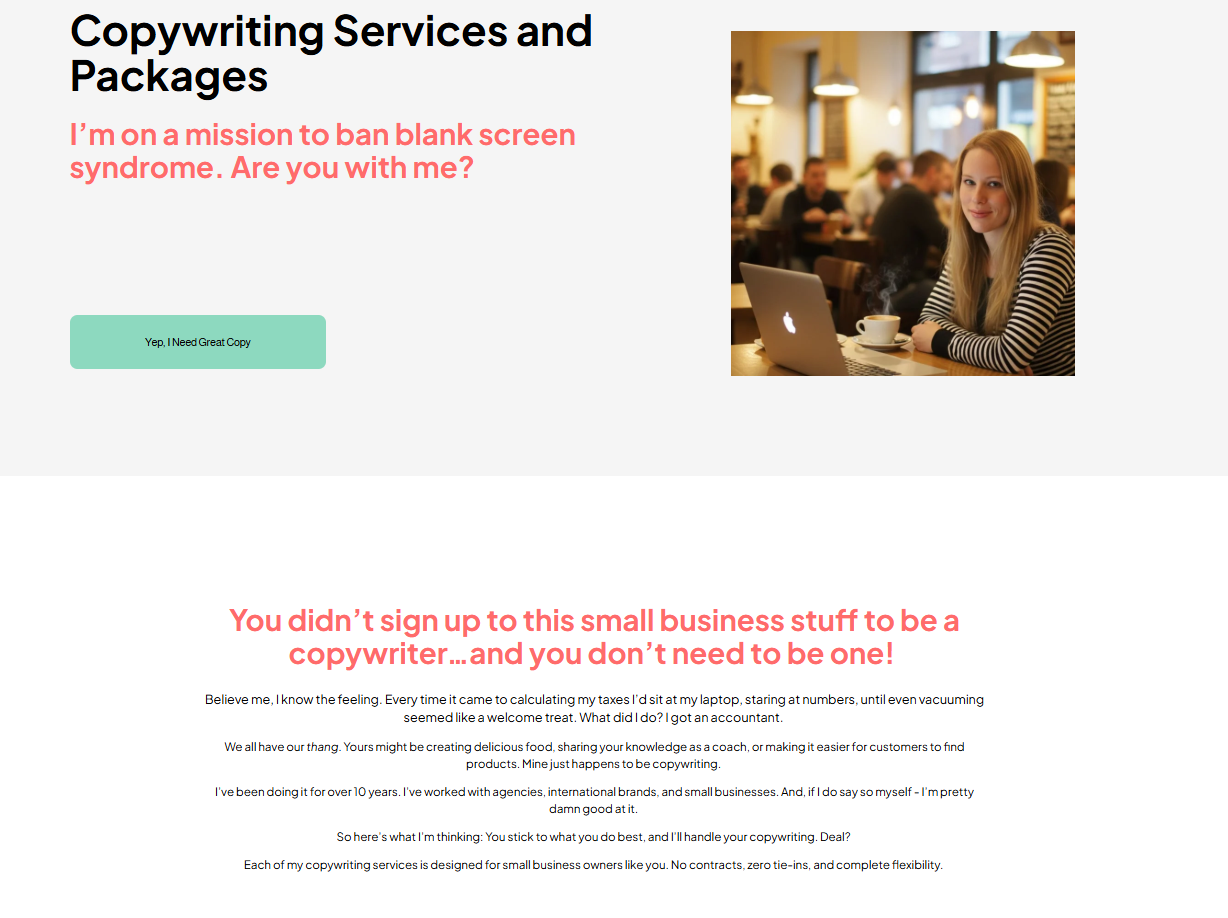
I was pretty confident going into this round that I’d win. I used the introduction to my website copywriting services page (which I wrote myself).
As a small-business digital marketer and copywriter, I worked with clients on limited budgets, helping them find their voice, connect with audiences, and compete with the corporate big guns.
I gave ChatGPT specific instructions, including my tone of voice, unique offering, and how I wanted the copy to come across.
For transparency, here’s the exact prompt I used:
I need an introduction for my copywriting services page. I work with small business owners, helping them save time and reach the right audiences. My focus is on letting small businesses know that they can access high-quality, affordable copywriting without a budget. The tone of voice should be clear, engaging, and direct. I take a no BS approach. Write the H1, H2, and initial content introducing my services.
Let’s take a look at my human-written version compared with ChatGPT’s output:
My Version
ChatGPTs
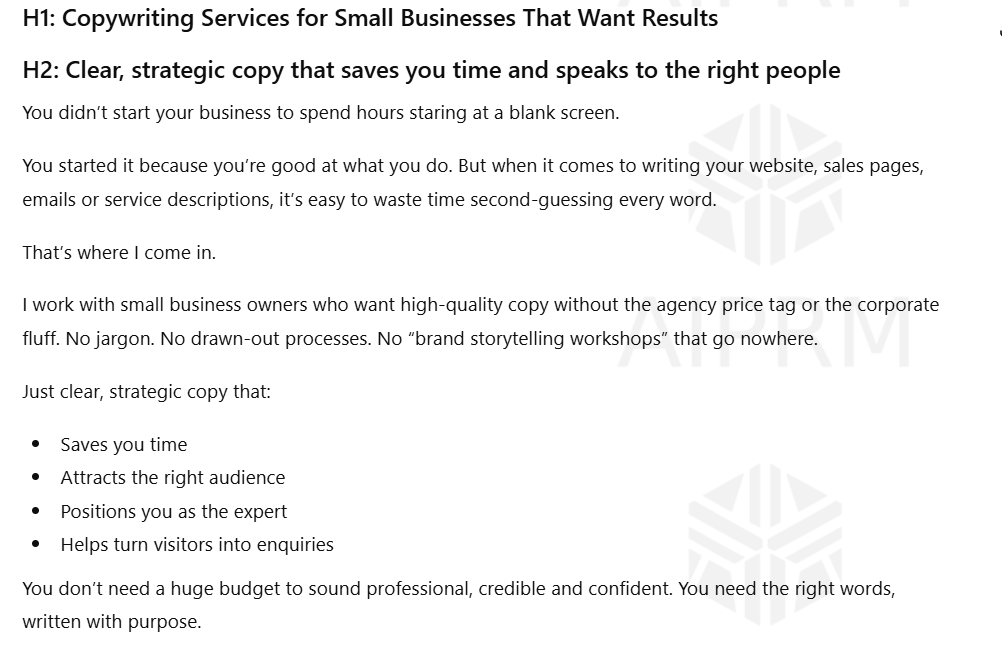
Winner: In my opinion, my copy wins. But I’ll leave that up to you to decide.
Round 3: SEO
SEO is vital for website copy. Even the most creative copy in the world won't make an impact if people can't find it.
Your website copy should include strategic keyword research, meta descriptions, header structures, and internal linking.
Both AI and a human copywriter who understands SEO know how to optimise content, but each works differently.
Where AI Wins
AI models are trained on SEO frameworks, and they know how to integrate keywords into content.
If you're handling repetitive high-volume tasks like creating meta descriptions, small variations on product descriptions, and location pages, using AI can significantly speed things up.
However, it gets repetitive quickly.
Where Humans Win
As long as you work with a human copywriter who understands SEO, you don't just get optimised content; you get strategy.
For example, I understand search intent and look beneath the surface to find keywords. For small businesses, this is vital.
You can't compete for high-volume terms that corporate brands use, but the right long-tail phrases can improve your organic visibility.
Winner: We'll call this a tie, because both AI and humans can streamline SEO. We just work in different ways.
Round 4: Emotional Connection
This round was over before it even started. AI models don’t work on emotion; they’re trained to recognise patterns and use vast datasets.
The best copy doesn’t tell, it shows. Most importantly, it connects with audiences. While AI models are trained to mimic what appears to be empathy, there’s a subtle disconnect.
In some ways, it’s like a sociopath. They can describe emotions, and even mirror them…but you notice the distinct lack of empathy.
So, let’s take a look at how AI stacks up against my copy. I took a section from one of the one-off marketing services website pages, and used this prompt to see what AI delivered:
I need a section for my SEO and marketing one-off services page. It should introduce the How it Works section and explain the ease of working with me and accessibility.
My Copy

AI Version
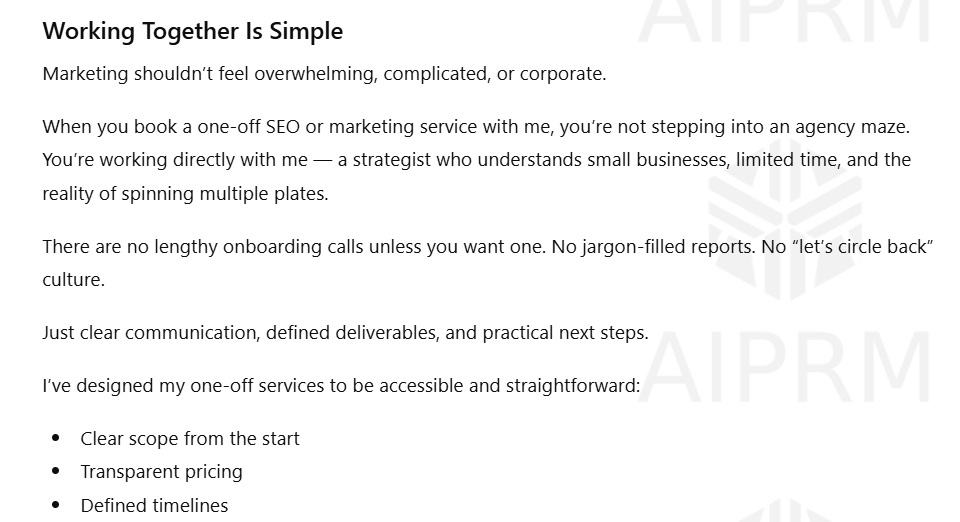
Winner: Well, it depends on how you want your website copy to come across. However, my human-written copy clearly empathises with small business owners, while the AI-generated version tells, but doesn’t really show that it understands your struggles.
Round 5: Consistency
OK, here’s where AI might just outshine human writers. If you have a website that requires multiple product description variations, meta descriptions, and generic service pages, all in a tight timeframe, you’ll probably need to hire multiple human writers.
The main issue here is that we all have our own style. Even though a professional writer will adapt to your tone of voice, there will always be subtle differences.
However, if you use a professional copywriter to define tone-of-voice guidelines and create a base content brief, AI tools can ensure consistency.
Again, I’m talking about generic pages that focus more on information than conversions.
Winner: AI can save time when you’re repurposing multiple product descriptions for variations, while humans should create the original copy that guides AI.
Round 6: Strategic Thinking
Which message should lead your homepage? What's the most compelling angle for this campaign? How do you position this service against a specific competitor who's dominating the market?
Strategic decisions require an in-depth understanding of the business, target audience, competition, and many other factors.
AI Models
AI models can offer options, and they definitely win when it comes to analysing large amounts of data.
While a human might take hours to understand data, artificial intelligence can provide insights in just seconds.
Humans
While AI can analyse data, it can't make decisions for you. The technology doesn't understand the emotions that drive people's decisions, so it can only provide logical insights.
Winner: Again, humans win this one. I use AI to analyse data, but the decisions I make about copywriting and marketing come down to understanding my client, their audience, and the competition.
Round 7: Cost
Now it's time to explore the costs of hiring a copywriter vs using AI tools. Again, on the surface, one might seem cheaper than the other. BUT, we have to factor in long-term ROI.
AI Tools
AI writing tools have different prices. ChatGPT is around £20 a month, while Jasper is £35, and Claude offers a range of plans.
Are they cheaper on the surface? Absolutely. But, with AI tools, you're paying for generic copy that's inspired by existing examples of copywriting.
Human Writers
I'm more expensive than an AI tool. Why? Because I create original copy for my clients. Every single thing I create is based on extensive research that enables me to get into the heads of your target audience.
This takes time and expertise. But the results justify the spend.
Winner: AI might seem like it wins, but bad or generic copy can cost you a huge amount of money. Businesses survive on leads and sales. So, in many cases, the initial higher spend of a professional copywriter results in more savings further down the line.
Round 8: Originality
Let's clear something up here: AI is trained on existing content. It cannot and will not create original content. Even though the output might pass plagiarism checks, there won't be any unique perspectives or opinions.
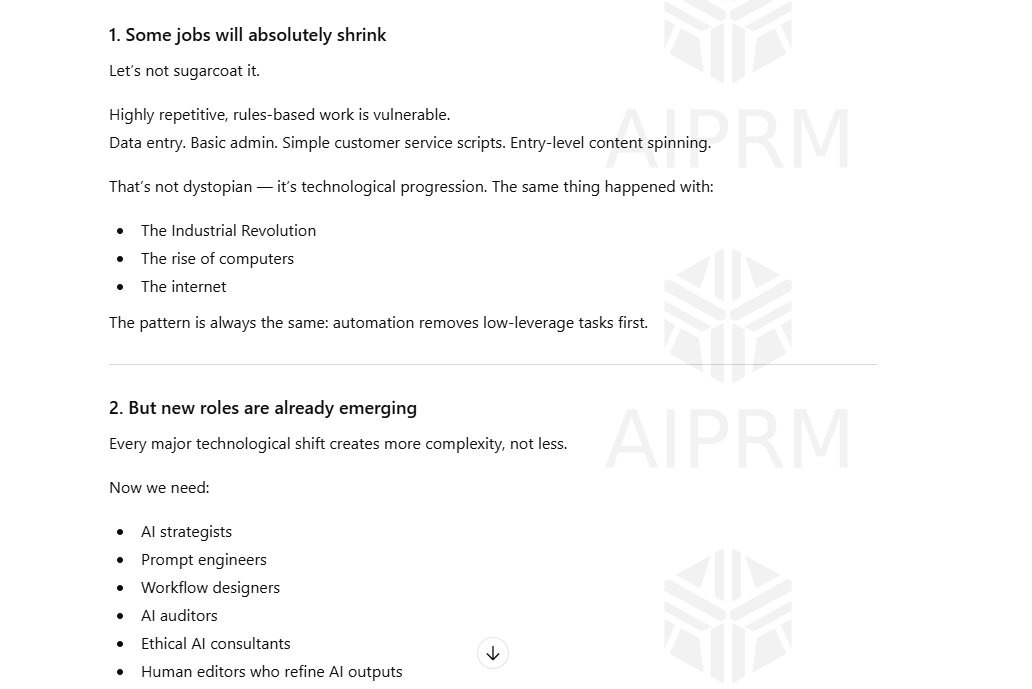
I asked Gemini, Perplexity, and ChatGPT to give me their opinions on whether AI will take human jobs. Here's what each of them said:
Gemini

ChatGPT
Perplexity
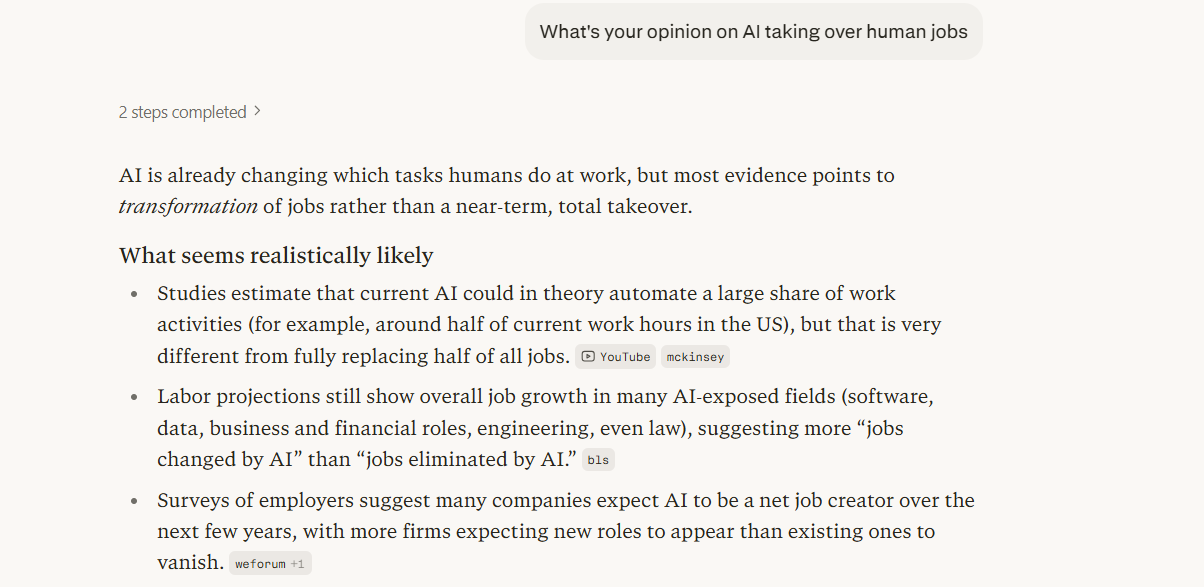
As you can see, each offers a structured opinion while still taking a neutral stance. AI can’t form its own opinion; it can only look at available data and provide a balanced answer.
Is it politically correct? Absolutely. Is it lacking human conviction and a hint of controversy? Definitely.
Winner: Humans win for originality, and I don’t even need to explain it. I know it, you know it, and even AI tools “know” it.
Round 9: Conversion Focus
Content writing is there to inform. Copywriting's sole purpose is to convert. Whether you want people to buy a product, sign up for a lead magnet, or fill in a contact form, you'll need conversion-focused copy.
Everything from headlines to CTAs must be understood through decision-making psychology, which AI tools can do. However, there's a big difference between understanding the basic rules of psychology and knowing how to trigger humans to take action.
I'll use examples from my own website here.
My Website CTA
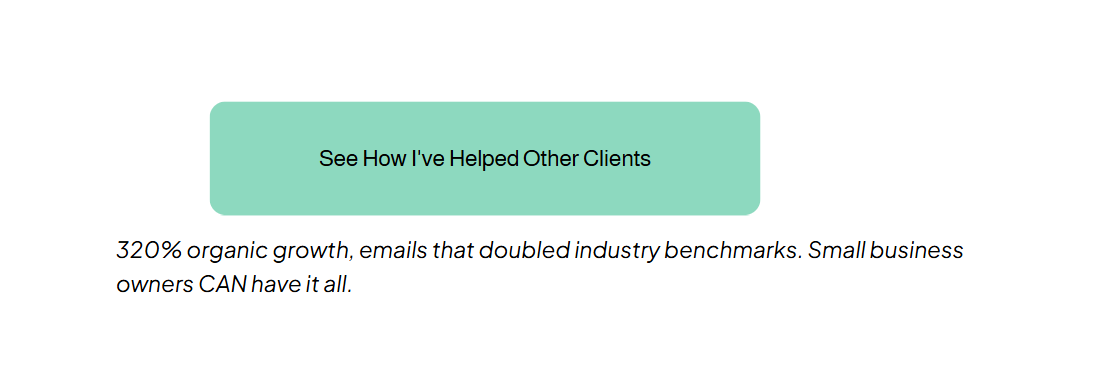
As you can see from this CTA directing you to my client testimonials, I've kept the text simple, but added microcopy underneath to encourage more clicks.
AI CTA
When I showed ChatGPT the website copy and link (leaving out my CTA), it came up with these ideas:
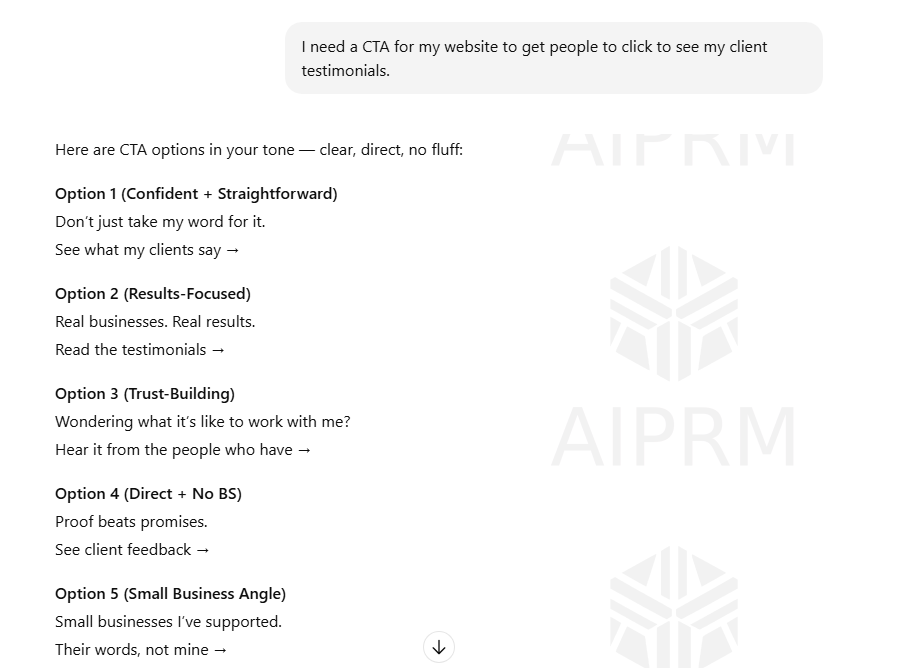
They're fine...but you'll see them on pretty much every other website out there.
Winner: Humans win this one hands down. When conversion matters, you want a human copywriter who understands the emotional decisions that guide each click.
Round 10: The Trust Factor
Heading into the final round, we have probably the most important thing when comparing humans with AI: trust. People don't buy products or services anymore; they buy trust.
Honesty, integrity, and authenticity are the three qualities every small business needs to succeed.
AI Tools
While AI can be diplomatic and produce content that seems trustworthy, it will never be authentic. The best copy ignites people's emotions.
Some might disagree, while others go away with a 'finally this brand understands me' feeling.
AI can't be controversial, and that makes it hard for people to trust it.
Humans
This is where human copywriters really shine. We know how to grab attention through content that challenges the norms.
Even though some people might find it too controversial, these opinions that cut through the noise are how the most powerful brands are built.
Winner: Human copywriters win on trust and authenticity.
The Final Scorecard
So, now it’s time to look at the final scorecard:
AI: 2 Wins
Human Copy: 7 Wins
Tie: 1
As you can see, human copywriters win when it comes down to originality, authenticity, and conversion focus. That doesn’t mean that AI doesn’t have its place, but copywriting should spark emotion, facilitate connection, and - most importantly - lead to conversions.
Hiring a copywriter might be more expensive outright, but the long-term ROI justifies your investment.
Think of AI as a complementary tool that supports data analysis and can repurpose supporting content. Think of a human copywriter as your ticket to connecting with your audience and building a successful small business.
Need some help with your copy? I offer a range of convenient copywriting packages designed for small business budgets.
